
Summary: Hazardous tree identification helps Colorado Springs homeowners spot dangerous trees before powerful fall windstorms cause costly property damage. Warning signs include dead branches, leaning trunks, cracked bark, exposed roots, and decaying wood. Peak Tree Service provides professional tree assessments, trimming, removal, and 24/7 emergency tree services to keep your property safe.
Hazardous Tree Identification: The 7 Warning Signs
Not every damaged tree needs removal, and not every healthy-looking tree is safe. You can spot several warning signs simply by observing your trees from a safe distance. Here are seven conditions that deserve attention before fall winds pick up:
Dead or Hanging Branches
Dead branches are the most common tree hazards. Look for limbs without needles or leaves during the growing season, branches with peeling bark, or broken limbs caught in the canopy. These branches can fall unexpectedly, particularly when strong gusts shake the tree.
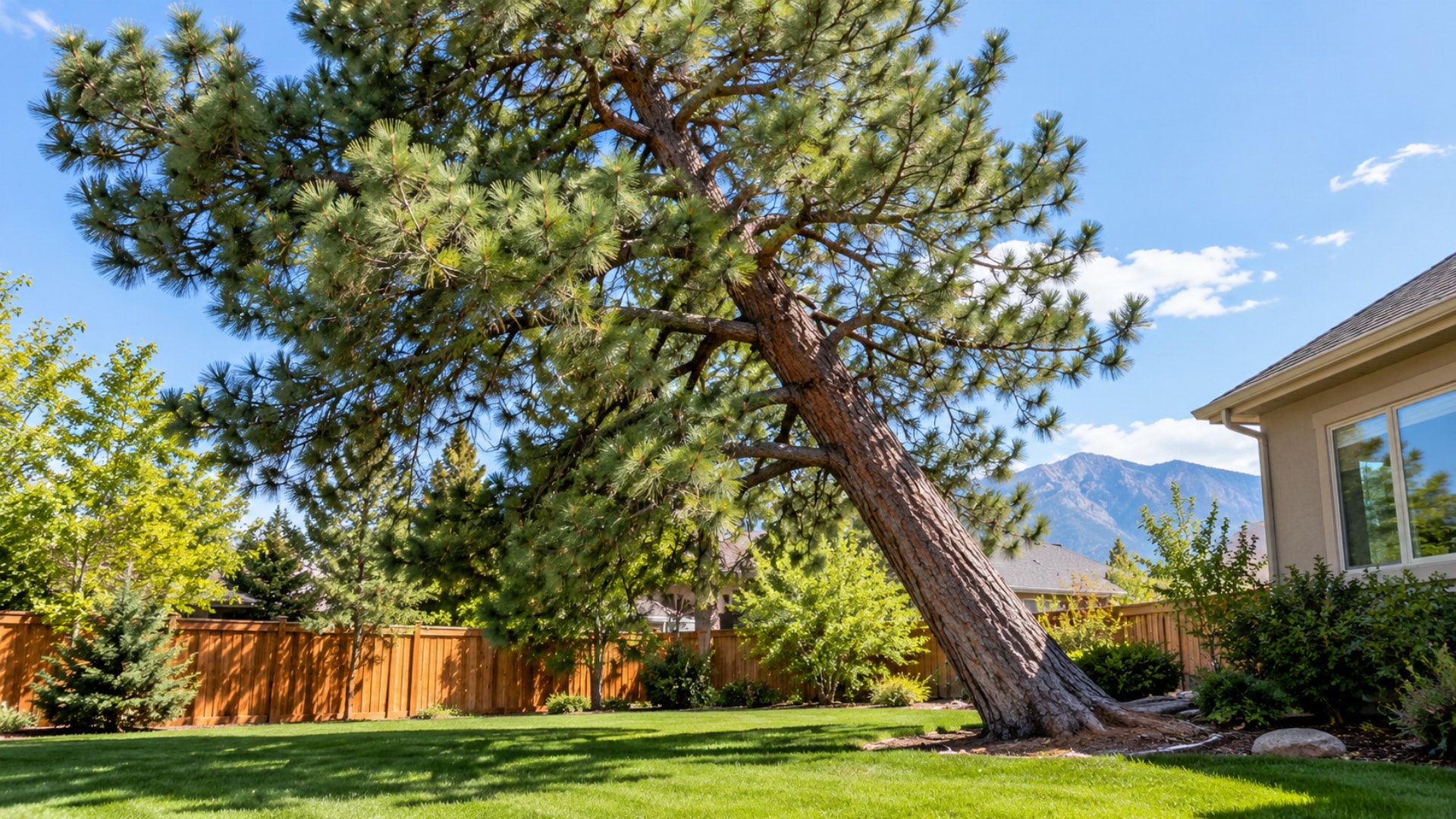
A Tree That’s Suddenly Leaning
Some trees naturally grow at an angle. However, a tree that recently started leaning deserves attention, especially if you notice exposed roots or raised soil near its base. These changes can indicate that the root system is losing its grip. Don’t attempt to straighten or support a large leaning tree by yourself.
Cracks or Splits in the Trunk
Deep cracks in a tree trunk can indicate serious structural weakness. Pay close attention to splits that extend down the trunk or form where two large branches meet. Wind puts extra pressure on these weakened areas, which can cause major sections to separate.
Mushrooms or Decaying Wood
Mushrooms growing near a tree’s base sometimes indicate decaying wood or roots beneath the surface. Other warning signs include hollow areas, soft wood, and large sections of missing bark. Although a hollow tree isn’t automatically unsafe, extensive decay can reduce its ability to withstand strong winds.
Exposed or Damaged Roots
Healthy roots anchor your tree and help it remain stable during windy conditions. Construction, soil erosion, trenching, and vehicle traffic can damage roots without immediately affecting the branches above. If your tree has exposed or damaged roots, you might notice lifted soil, severed roots, or movement around the base of the trunk.
Weak Branch Connections
Trees sometimes develop two large trunks or branches growing closely together from the same point. When bark gets trapped between them, the connection can weaken. Heavy branches extending far from the trunk can also create problems when wind increases their movement. Proper pruning can reduce some risks, but removing too much growth can weaken a tree.
Previous Storm Damage
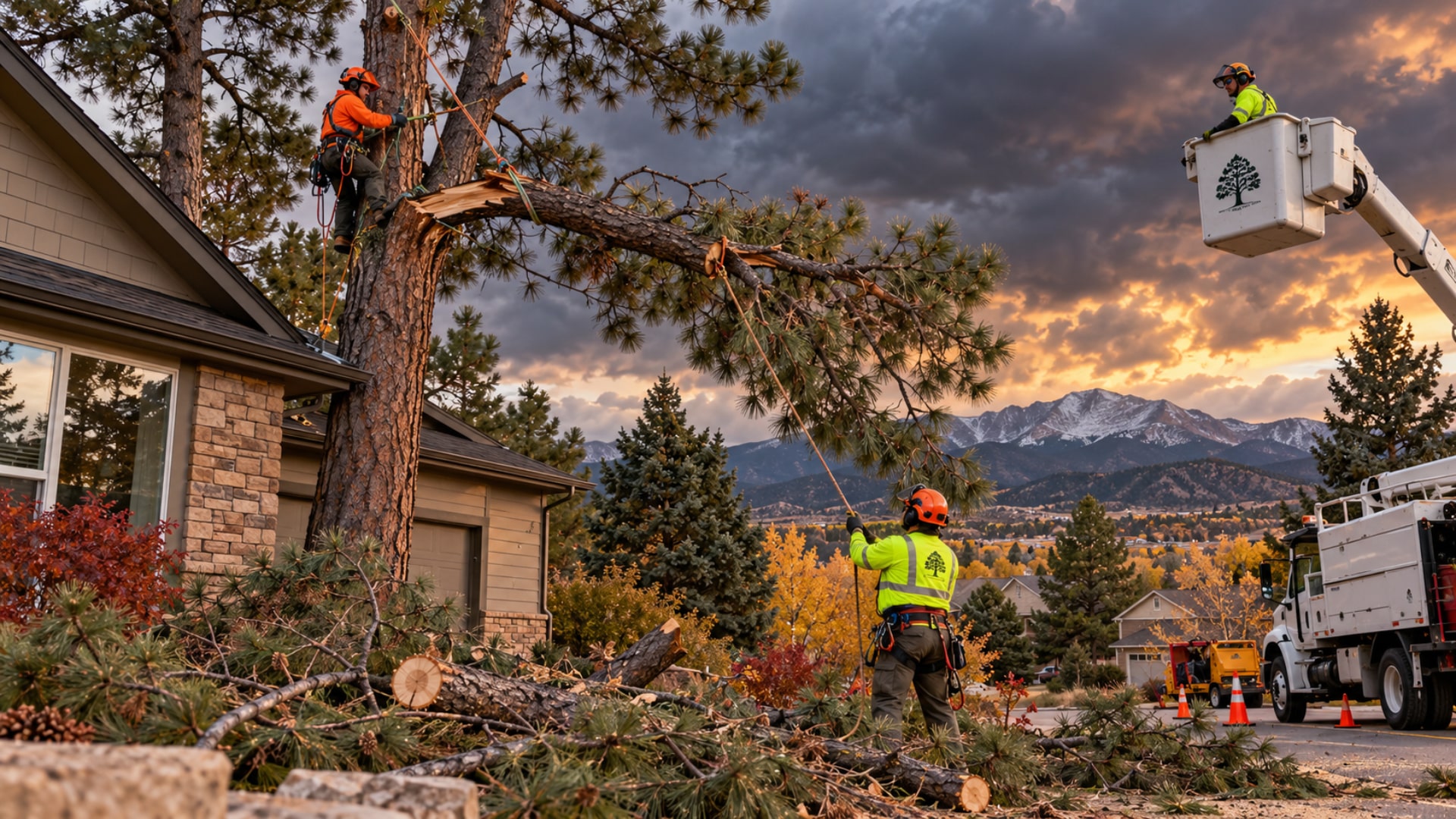
Has your tree already survived a heavy snowstorm or powerful summer thunderstorm? Broken branches, damaged tops, and partially detached limbs can remain hidden high in the canopy. Even if the tree survived the first storm, its remaining structure may be compromised. Assessing older storm damage before fall helps prevent weakened sections from causing additional problems.
Read Also: Tree Thinning in Colorado Springs: How Professional Thinning Protects Your Home from Snow Damage
Hazardous Tree Identification: Which Colorado Springs Trees Need Extra Attention?
Different trees respond differently to wind, drought, and seasonal weather changes. Colorado Springs properties commonly feature ponderosa pines, blue spruces, cottonwoods, elms, and various ornamental trees. Each species has its own growth habits and potential weaknesses:
- Ponderosa pines: Watch for dead or hanging branches, thinning needles, leaning trunks, and signs of bark beetle activity. Drought, insects, and root damage can stress ponderosa pines. Large dead limbs and trees with compromised roots can pose serious risks.
- Blue spruces: Look for browning or thinning needles, dead lower branches, peeling bark, extensive dieback, and signs of fungal disease or insect infestations. Colorado blue spruces most commonly struggle with drought, heat stress, needle cast diseases, and Cytospora canker.
- Cottonwoods: Watch for large dead branches, hollow trunks, visible decay, and cracks where heavy limbs meet the trunk. Mature cottonwoods grow quickly and can develop massive branches that become hazardous as the tree ages, particularly when internal decay or previous storm damage weakens them.
- Elms: Watch for dead or dying branches, thinning foliage, cracked trunks, and weak connections between large limbs. Elm trees can suffer from Dutch elm disease, drought stress, beetle infestation, and structural problems caused by crowded or poorly attached branches.
- Aspen trees: Watch for dead or brittle branches, thinning canopies, peeling or discolored bark, and signs of trunk decay. Aspens in Colorado Springs are particularly vulnerable to drought stress, fungal diseases, cankers, and wood-boring insects.
Your tree’s species alone doesn’t determine whether it’s dangerous. Its overall condition, surroundings, root stability, and wind exposure all matter. If you have a questionable tree in your yard, have hazardous tree identification conducted by a professional.
Tree Trimming or Tree Removal: What’s the Right Solution?
Discovering a potentially hazardous tree doesn’t automatically mean you need to remove it. Sometimes, targeted trimming can remove dead branches, reduce weight on weakened limbs, and improve clearance around your home.
We understand that you probably want to preserve your trees whenever possible. That’s why our tree trimming services consider the tree’s overall structure and health. We’ll do everything we can to preserve your trees. When a tree is too far gone, our tree removal services provide a practical way to protect your property.
Why Colorado Springs Homeowners Choose Peak Tree Service for Hazardous Tree Identification
When you discover a dangerous tree, you need a dependable local company that respects your property. At Peak Tree Service, we’ve served Colorado Springs homeowners since 2008, handling everything from routine tree maintenance to challenging removals. We understand the weather, local tree species, and concerns that come with maintaining Front Range properties.
Here’s what makes working with Peak Tree Service different:
- Owner involvement: Don Ruybal personally inspects your trees and provides your quote during the same visit.
- Free quotes: You’ll know what the recommended work involves before you decide.
- Transparent pricing: Detailed, itemized estimates help you understand costs without hidden surprises.
- Licensed and insured service: Your property receives professional attention with safety as a priority.
- Proven local reputation: Our website highlights more than 200 five-star reviews and our 2026 Best of the Springs recognition for tree removal.
- Convenient scheduling: We work with you to schedule service at a time that’s convenient.
We also know that your tree concerns don’t always end with wind damage. Overgrown branches can affect your home’s appearance, create clearance problems, and contribute to wildfire concerns in wooded neighborhoods. That’s why we also offer wildfire mitigation and 24/7 emergency services. Instead of juggling multiple contractors, you can address several tree care needs with one trusted local company.
Related: Defensible Space Maintenance: How to Maintain Protection Throughout Colorado’s Wildfire Season
Don’t Wait for the Next Windstorm to Find Out Your Tree Is Dangerous
A questionable tree might stand for years without causing trouble, but that doesn’t mean you should ignore obvious warning signs. Protecting your property starts with recognizing problems before they become emergencies.
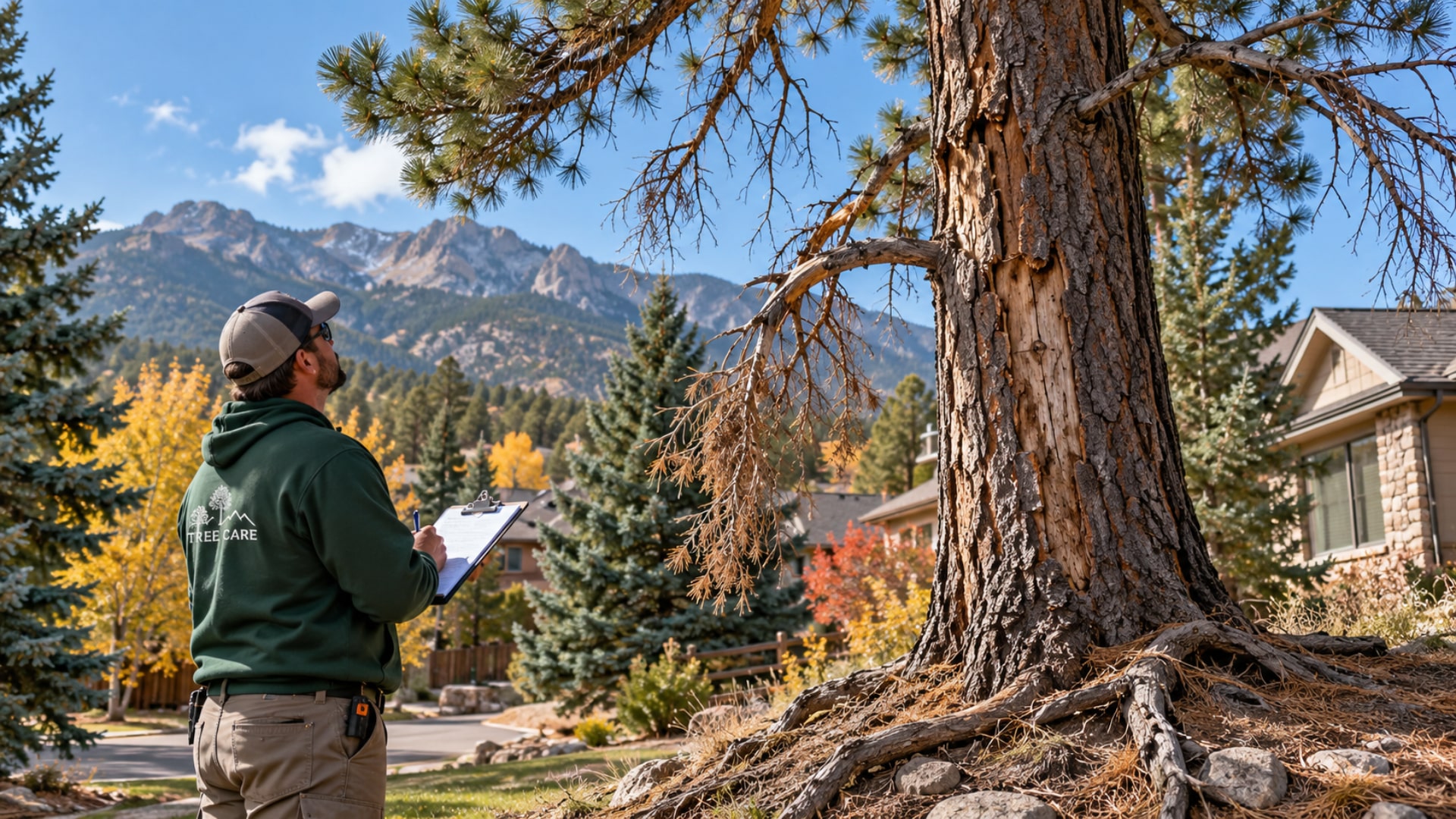
When you’re ready to find out whether your trees are safe, reach out to Peak Tree Service. You’ll get a fast, free quote from the owner, Don Ruybal, who will inspect your trees, explain your options, and provide straightforward pricing during your appointment.
FAQs: Hazardous Tree Identification
How can I tell if a tree is hazardous before a windstorm in Colorado Springs?
Common signs of a hazardous tree include dead or hanging branches, a leaning trunk, deep cracks, exposed roots, and signs of decay. Colorado Springs’ strong fall winds can cause weakened trees or limbs to fall, potentially damaging your home, vehicles, or surrounding property. Professional hazardous tree identification can help you determine whether you need trimming or removal.
Should I remove a leaning tree before strong winds hit Colorado Springs?
Not every leaning tree needs removal, but a tree that suddenly starts leaning or has exposed roots may pose a serious safety risk. Strong winds can increase the likelihood that a weakened tree will fall, especially if it is near your home, driveway, or power lines. An assessment can help determine whether the tree can be safely trimmed or should be removed.
Who should I call for hazardous tree removal in Colorado Springs?
If you notice a dangerous tree near your home, contact a trusted local tree service that offers hazardous tree assessments, trimming, and removal. Peak Tree Service provides reliable tree care and 24/7 emergency tree services throughout Colorado Springs and the Pikes Peak Region. Get in touch with Peak Tree Service to protect your property before the next windstorm.
Related posts:
 Dead Tree Removal in Colorado Springs: Why Immediate Action Protects Your Home
 The Critical First 24 Hours: Emergency Tree Removal After Snowstorm in Colorado Springs
 Ice Storm Tree Protection: Safeguarding Your Colorado Springs Property Before Winter Weather
 Tree Storm Damage Risk: Warning Signs Your Tree Won’t Survive Colorado Springs Storms