
Summary: Roof damage from overhanging branches is a serious winter concern for homeowners, as heavy snow, ice, and strong winds can break limbs, damage shingles, clog gutters, and lead to costly repairs. Regular tree inspections, preventative trimming, and hazardous branch removal from Peak Tree Service can help protect your roof before winter storms arrive.
How Overhanging Tree Branches Can Damage Your Roof
Branches don’t necessarily need to fall to damage your house.
Here are several ways nearby trees can threaten your roof:
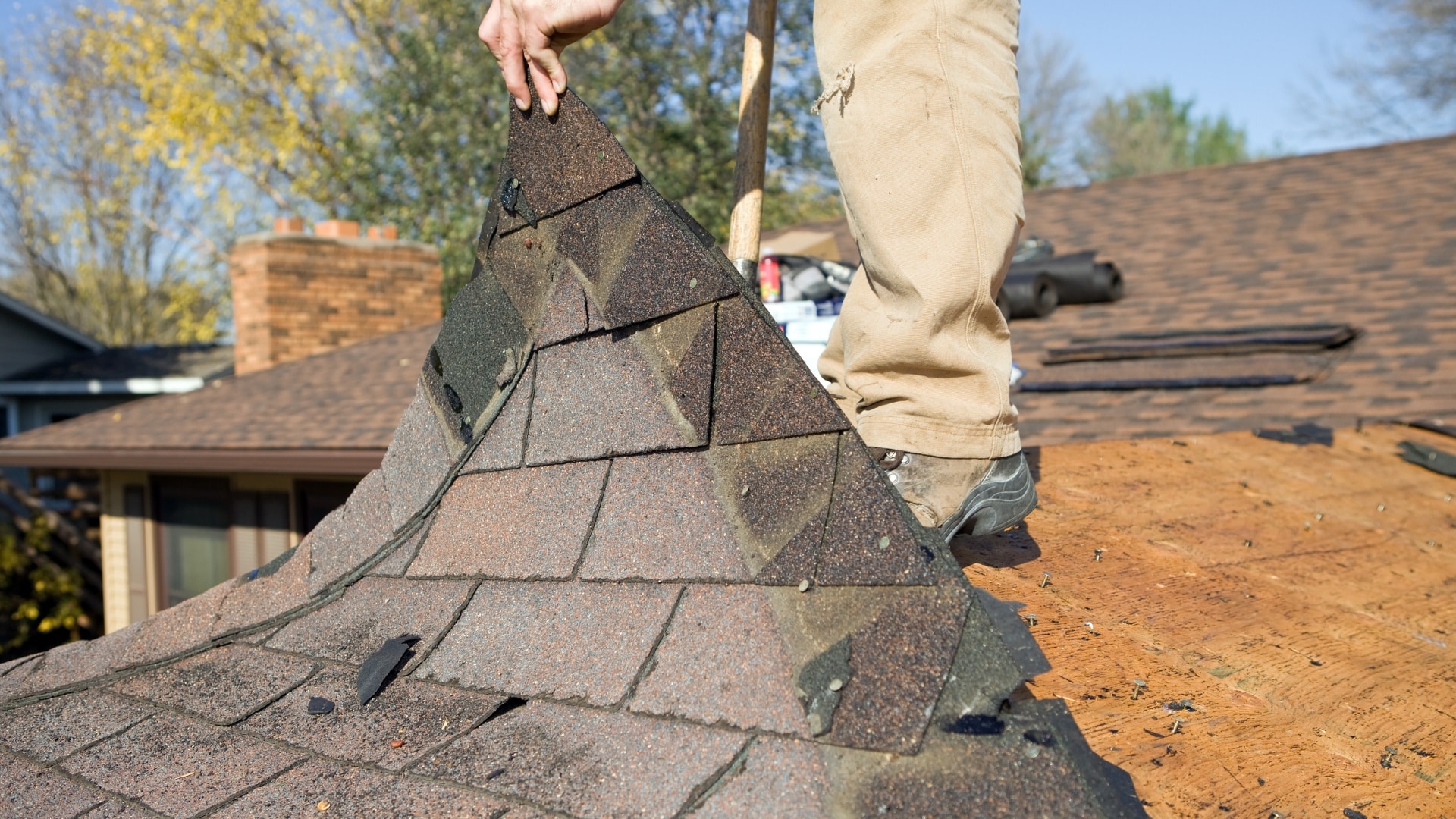
- Scratched or damaged shingles: Branches rubbing against your roof can wear away protective shingle granules, loosen roofing materials, and expose areas to moisture.
- Broken shingles and punctures: Heavy branches that snap under snow or ice can damage shingles, flashing, roof vents, and even the underlying roof structure.
- Clogged gutters: Falling pine needles, leaves, and small branches can block drainage, causing melting snow to back up around vulnerable roof edges.
- Moisture problems: Branches resting against your roof can trap debris and moisture, creating conditions that encourage moss growth and roofing deterioration.
- Damaged skylights and vents: Falling limbs can strike skylights, chimneys, ventilation pipes, and other exposed roof features, leading to leaks.
Problems don’t always appear immediately after a storm. You might notice missing shingles, unusual gutter overflow, or water stains weeks after the original damage occurred.
Roof Damage from Overhanging Branches: The Warning Signs
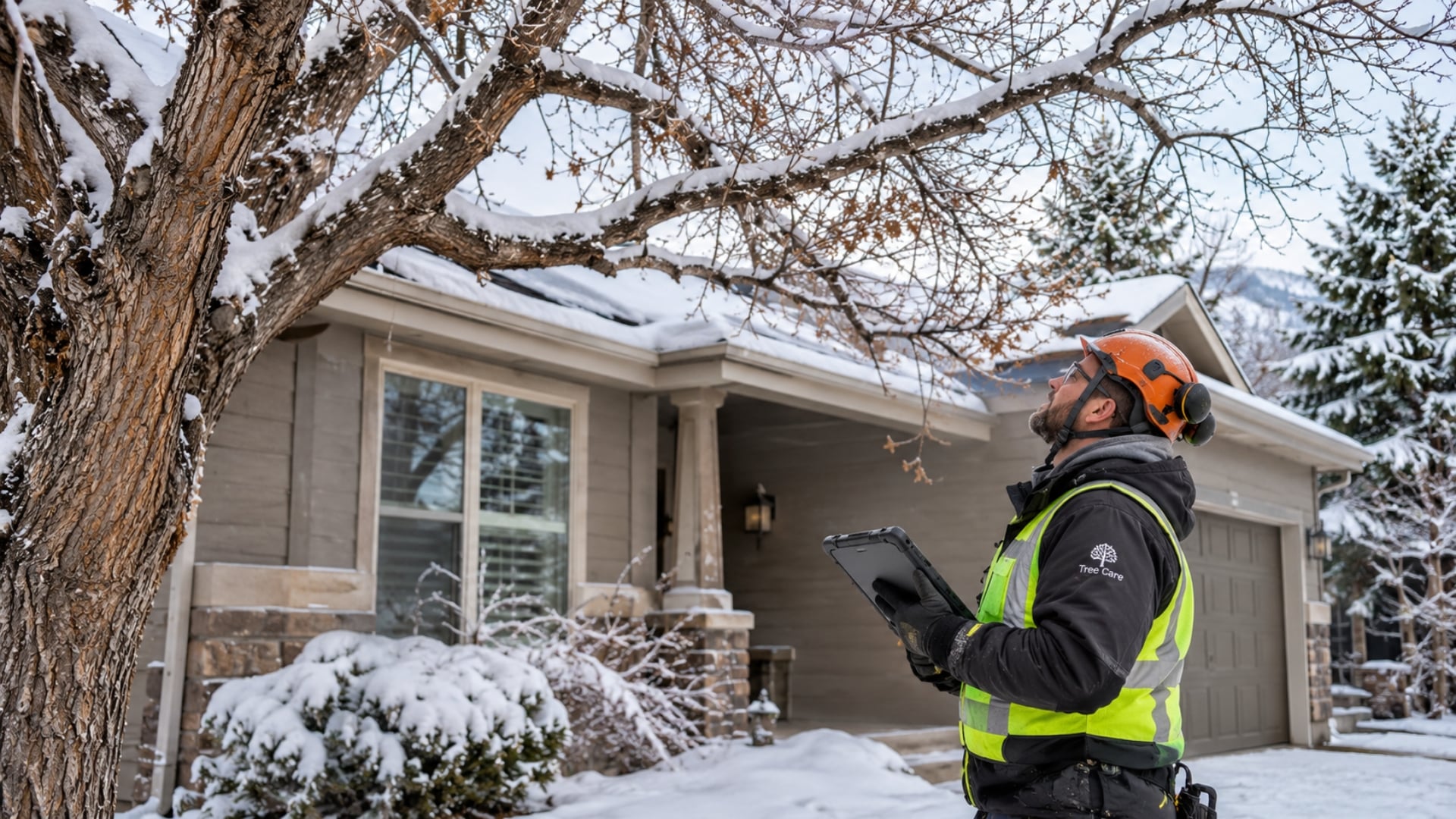
You don’t need to climb onto your roof. Many warning signs are visible from below. When conditions are safe, walk around your property and look closely at branches growing toward your house.
Pay particular attention to:
- Branches touching your roof: Even occasional contact during windy weather can create unnecessary wear.
- Large limbs extending over your house: Heavy branches deserve closer inspection, particularly when they show signs of weakness.
- Dead or broken branches: Brittle limbs and hanging wood are more likely to fail during storms.
- Cracks or splitting: Visible cracks around major branches may indicate structural weakness.
- Excessive pine needles or leaves: Constant debris accumulation may indicate branches are too close to your roofing and gutters.
- New leaning or sagging: Sudden changes in branch position can suggest damage or developing instability.
If you notice multiple warning signs, consider scheduling a professional tree assessment before the next major snowfall.
Related: Hazardous Tree Identification: Is Your Tree a Danger During Fall Wind Storms in Colorado Springs?
Local Trees That Deserve Extra Attention
Different tree species respond differently to winter conditions.
Your property’s trees should be evaluated based on their condition, size, location, and growth:
- Ponderosa pines: Large limbs can extend over rooftops, and dead branches and heavy snow accumulation may increase the risk of falling debris.
- Blue spruces: Dense evergreen branches can collect substantial snow, making existing structural weaknesses especially concerning.
- Cottonwoods: Mature cottonwoods often develop enormous limbs that can cause significant damage when weakened branches break.
- Aspens: Their relatively slender trunks and branches can bend under snow loads, while disease, decay, and aging stems may increase the chance of failure.
- Elms: Broad, spreading canopies can extend over homes, and crowded or damaged limbs may require selective pruning to reduce hazards.
How to Prevent Roof Damage From Overhanging Branches
Preventing problems starts with identifying the branches most likely to affect your home. Start with these simple tips.
Scheduling Preventative Tree Trimming
Professional trimming removes dead, damaged, and poorly positioned branches before they become larger hazards. Proper pruning can also reduce excessive weight on selected limbs and improve the overall structure of your trees.
Maintaining Safe Clearance Around Your Roof
Branches shouldn’t rest against shingles, gutters, or other roofing materials. Even when a limb isn’t touching your home today, consider how far it might bend under heavy, wet snow. A tree care professional can recommend appropriate clearance based on the tree species, branch size, roof design, and surrounding conditions.
Keeping Gutters and Roof Valleys Clear
Tree debris can quickly collect in gutters and roof valleys, especially when evergreen branches extend above your house. Blocked drainage may contribute to water buildup and ice-related roofing problems during freeze-thaw cycles. Clear accessible debris safely from the ground when possible, and hire appropriate professionals for elevated roof or gutter work.
Inspecting Trees After Major Storms
After a major snowstorm or wind event, look for newly hanging branches, broken limbs, exposed wood, or unusual leaning. If a limb looks unstable or threatens your home, arrange professional help before the next storm.
Read Also: Tree Storm Damage Risk: Warning Signs Your Tree Won’t Survive Colorado Springs Storms
What to Do When a Branch Falls on Your Roof
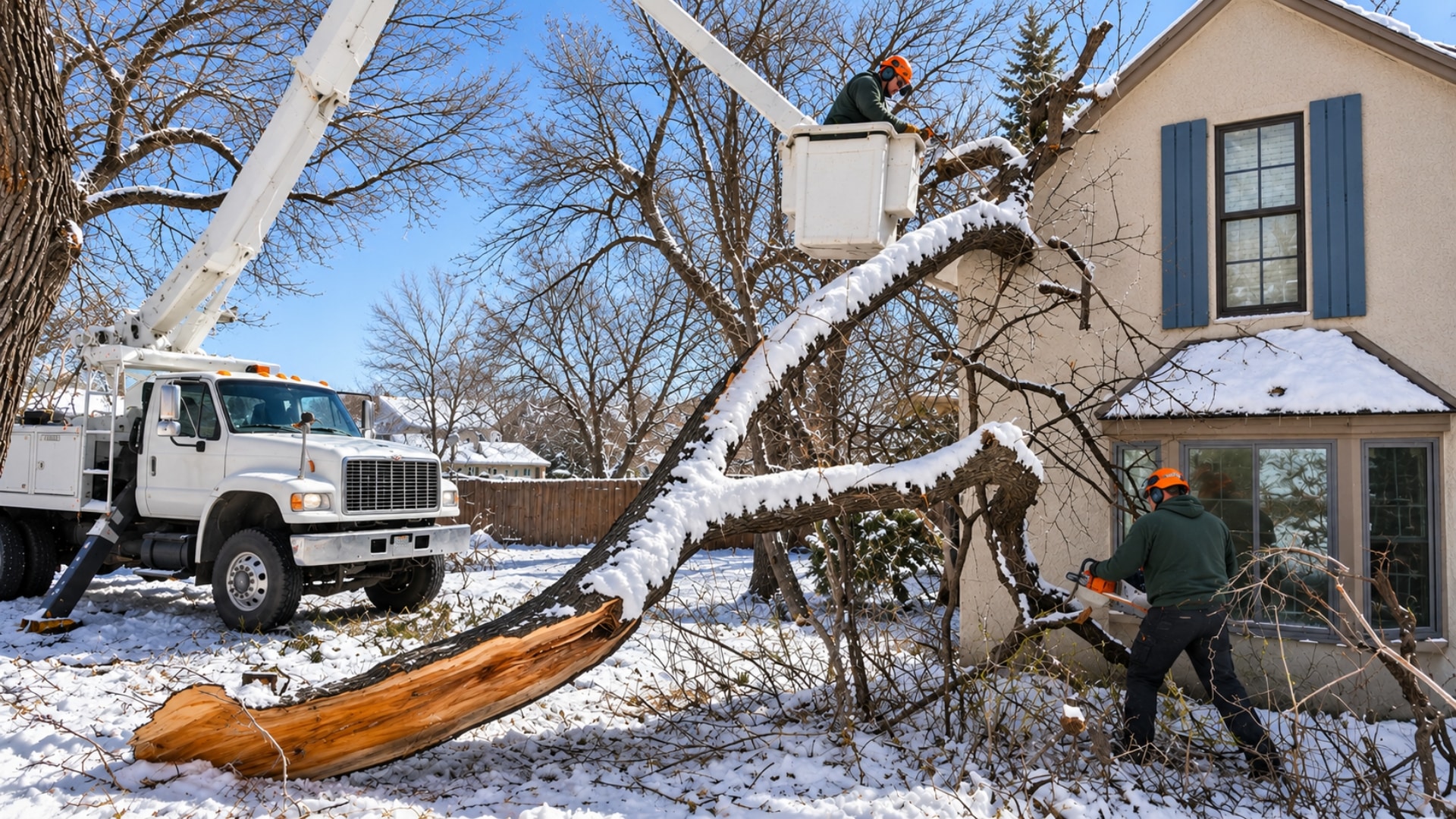
Even well-maintained trees can suffer unexpected damage during extreme winter weather. If a large branch falls onto your roof, your priority should be keeping everyone safe. Stay away from damaged areas, avoid standing beneath unstable limbs, and never climb onto a compromised roof. If you notice structural damage, electrical hazards, or other immediate dangers, contact the appropriate emergency responders or utility provider.
Once the immediate area is safe, document visible damage from a secure location and contact your insurance company when appropriate. Avoid moving large branches yourself, since shifting weight can create additional damage or injuries. At Peak Tree Service, we provide 24/7 emergency tree services for fallen trees, storm-damaged limbs, and hazardous situations throughout the Colorado Springs area. Getting qualified help quickly can prevent an already stressful situation from becoming worse.
Why Colorado Springs Homeowners Choose Peak Tree Service
When branches threaten your roof, you want a dependable local company that respects your property, communicates clearly, and recommends work that actually solves the problem.
Here’s what makes working with Peak Tree Service different:
- Owner involvement: Owner Don Ruybal personally inspects your trees and provides your quote during the visit.
- Fast, free estimates: You can arrange a convenient inspection and receive a quote during the same appointment.
- Transparent pricing: Detailed, itemized quotes explain the work and costs without hidden fees.
- Licensed and insured service: Feel confident hiring a company that takes safety and accountability seriously.
- 200+ five-star reviews across platforms: Our reputation reflects the experiences of homeowners who’ve trusted us with their properties.
- Award-winning local service: We’re proud to be the 2026 Best of the Springs winner for Best Tree Removal Company.
We understand that your property deserves careful treatment throughout the job. Our goal is to complete your tree trimming or removal efficiently, protect surrounding areas, and leave your property cleaner than we found it.
Stop Roof Damage from Overhanging Branches Before It Occurs
Winter tree problems aren’t going away. A branch scraping your shingles today could become a broken limb during the next heavy snowfall, potentially leading to roofing repairs, water damage, and unexpected expenses.
Don’t wait until a falling branch turns a manageable tree problem into an emergency. Reach out to Peak Tree Service today for a fast, free quote on tree trimming, hazardous tree removal, or preventative maintenance in Colorado Springs. We’ll help you protect your roof and trees and enjoy greater peace of mind this winter.
FAQs: Roof Damage from Overhanging Branches
Can overhanging tree branches damage my roof during Colorado Springs winter storms?
How far should tree branches be from my roof to prevent damage?
Who should I call to remove dangerous tree branches hanging over my house in Colorado Springs?
Related posts:
 Tree Health Inspection in Colorado Springs: 5 Winter Problems Homeowners Miss
 Winter Tree Damage in Colorado Springs: How Freeze-Thaw Cycles Harm Your Trees
 Tree Thinning in Colorado Springs: How Professional Thinning Protects Your Home from Snow Damage
 Ice Storm Tree Protection: Safeguarding Your Colorado Springs Property Before Winter Weather